



Ferry crossings, bridges and tunnels
The most popular ferry crossings in Europe
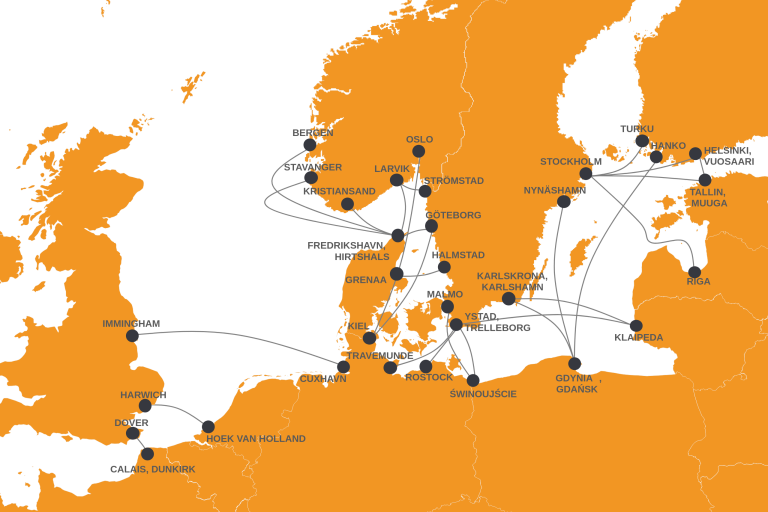
Efficient route planning often requires combining road transport with maritime or infrastructure crossings. To streamline this process, we handle the practical aspects of organizing passages across major European corridors, including:
- ferry routes on the Baltic Sea, North Sea and connections to the UK
- bridge crossings such as Øresund and Storebælt
- tunnels including Mont Blanc, Fréjus and Eurotunnel between Great Britain and France
This allows our trucks and other vehicles to move through Europe smoothly, with predictable transit times, regardless of cargo type. We also manage crossings for ADR and oversized loads, ensuring compliance with operator regulations and local requirements.
Ferries, bridges and tunnels as part of European transport networks
- Świnoujście - Ystad
- Świnoujście - Trelleborg
- Świnoujście - Malmö
- Gdańsk - Nynäshamn
- Gdynia - Karlskrona
- Gdynia - Södertälje
- Rostock - Trelleborg
- Travemünde - Trelleborg
- Kiel - Göteborg
- Kiel - Oslo
- Grenaa - Halmstad
- Frederikshavn - Göteborg
- Helsingborg - Helsingør
- Hirtshals - Kristiansand
- Hirtshals - Larvik
- Hirtshals - Stavanger
- Hirtshals - Bergen
- Hirtshals - Langesund
- Helsinki - Tallinn
- Vuosaari - Muuga (Vuosaari = port w Helsinkach)
- Helsinki - Stockholm
- Turku - Stockholm
- Tallinn - Stockholm
- Paldiski - Kapellskär
- Calais - Dover
- Dunkirk - Dover
- Cuxhaven - Immingham
- Hoek van Holland - Harwich
- Øresund Bridge (Denmark-Sweden)
- Storebælt Bridge (Great Belt Bridge, Denmark)
- Mont Blanc Tunnel (France-Italy)
- Fréjus Tunnel (France-Italy)
- Dover-Calais Eurotunnel (UK-France)
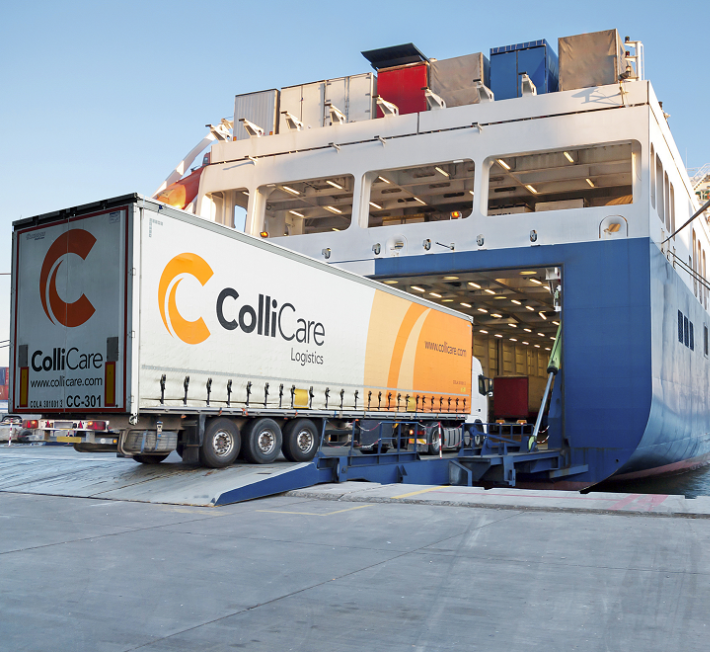
Need support with planning your route?
-
Ferry tickets for trucks, oversized loads, vans, and trailers
-
Bookings for hazardous (ADR) and oversized cargo
-
Driver support 7 days a week
Bridges and tunnels as fixed European corridors
Bridges and tunnels are some of the most important fixed links in European road infrastructure. At ColliCare, we include these crossings in our daily transport planning to create predictable and time‑efficient routes for trucks, vans, ADR shipments and oversized cargo.
Tunnels and bridges connect regions where ferry services are limited, weather‑dependent or time‑consuming. For long‑distance road transport, they support continuity and help avoid delays that can occur on traditional maritime routes. Integrating these passages into logistics routines allows transport planners to choose the most stable and reliable path for each type of cargo.
Key European links
We handle operational planning across a wide range of bridges and tunnels, including:
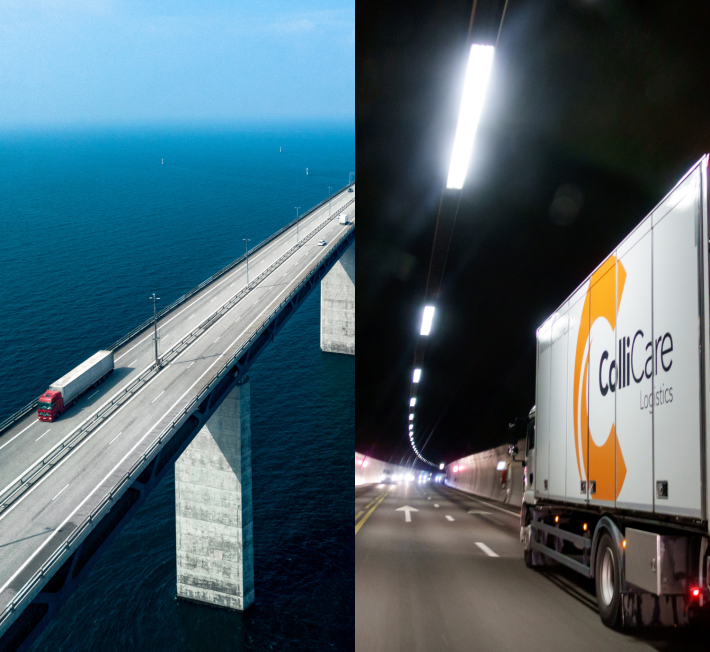
- Øresund Bridge between Denmark and Sweden
- Storebælt Bridge in Denmark
- Mont Blanc Tunnel and Fréjus Tunnel between France and Italy
- Dover–Calais Eurotunnel between the UK and France
Need support in planning a route that includes a ferry, bridge or tunnel?
If you are working on a route that requires a ferry crossing or passage through a bridge or tunnel and need operational assistance, feel free to contact us. We will help coordinate the necessary steps and ensure your transport continues without disruptions.
Contact us

Paulina Jurgiewicz
Ferry Office ManagerFAQ - Frequently asked questions about booking ferries, tunnels and bridges
Typical details include vehicle type, dimensions, cargo specifics, ADR classification (if applicable), preferred route and desired travel time. This allows to select the most suitable corridor and plan the crossing efficiently.
We work with key corridors in the Baltic Sea region, the North Sea and connections between continental Europe and the United Kingdom. These routes are relevant for both regular transport flows and occasional international shipments.
Not all ferry operators, bridges or tunnels allow every type of shipment. We verify restrictions for ADR categories, weight limits and oversize parameters and choose suitable routes accordingly.
Early planning helps secure the preferred corridor and ensures cargo-specific requirements are met. However, we also support crossings that need to be arranged on short notice, depending on availability and operational conditions.
Winter conditions, holiday peaks or regional traffic patterns may affect availability or travel time on some corridors. Bridges and tunnels often provide more stability during challenging seasons, while ferry routes may offer advantages when traffic is heavy or when detours are long.
Didn't find what you were looking for?

